


Rates Are at a Two-Year High. Your Cost Per File Is About to Rise With Them.
The ten-year Treasury passed 5.1% on Wednesday, a nineteen-year high.
The daily thirty-year index closed Thursday at 7.45%, up nineteen basis points in a single session and the highest reading since May 2024.
Refinance volume at these levels is effectively gone, and purchase volume thins as affordability tightens into the end of the mortgage season.
Falling volume raises your cost per file.
An underwriting seat costs about $147,500 a year fully loaded — A processing seat costs about $88,131. Those numbers do not move when your pipeline thins. They are annual commitments, and they are the same in February as in June.
What moves is the denominator. Cost per file is the annual cost divided by the files that seat actually clears, so every file that does not arrive raises the cost.
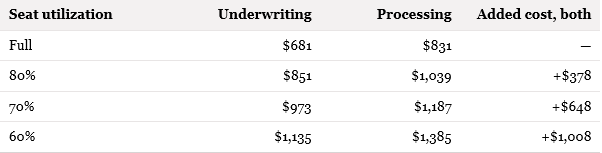
A shop running seats at 70% of capacity — not an unusual place to end up two quarters into a rate shock — is paying $973 to underwrite a file and $1,187 to process one. The volume simply did not arrive, and the arithmetic did the rest.
The Solution
Contract fulfillment converts a fixed annual commitment into a per-file expense incurred only when work exists. When next quarter’s volume cannot be forecast within twenty percent, that flexibility is invaluable.
What you should do this month
Pull three numbers. Your files cleared per underwriter and per processor over the last twelve months, your fully loaded cost per seat, and your realistic trough volume for the next two quarters, given what the bond market did this week.
We would be glad to run the numbers with you, whether or not the answer sends any work our way.